
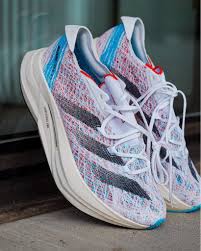
By PhysioRun · Updated June 2026
Adidas has one of the most genuinely impressive running shoe ranges available right now — and also one of the most confusing to navigate. The Adizero line alone spans everything from a 135g sub-2-hour marathon shoe to a 50mm-stack curiosity that’s illegal in elite competition. The foam technology has its own naming system. And the EnergyRods — Adidas’s answer to the carbon plate — are something most runners have never heard of despite being a genuinely brilliant piece of engineering.
This guide breaks it all down: what the tech actually does, where each shoe fits in the range, and which shoes make sense for runners managing injury or building back from one.
The Adidas Running Philosophy
Three technologies underpin everything Adidas does in running:
BOOST foam — the original Adidas performance innovation. Millions of TPU (thermoplastic polyurethane) capsules fused together in a honeycomb structure. BOOST is extraordinarily durable, returns energy well across a wide temperature range, and has a distinctive springy, cushioned feel. Used in the Ultraboost and some Supernova models. The benchmark for everyday comfort foam.
Lightstrike Pro — the newer performance foam used in the Adizero race range. Lighter than BOOST, higher energy return, softer and bouncier with the updated formulation used in the Adios Pro 4 onwards. This is Adidas’s answer to Nike’s ZoomX and Saucony’s PWRRUN PB. Recent testing placed the Adios Pro 4 at 80.4% energy return — the highest score recorded for any running shoe at time of testing.
EnergyRods — the most interesting piece of technology in the range. Instead of a solid carbon fibre plate running the full length of the shoe (as Nike and HOKA use), Adidas embeds five carbon-infused TPU rods that fan out through the forefoot, mirroring the arrangement of the metatarsal bones. This gives longitudinal stiffness — the force direction that matters for propulsion — while allowing more transverse and torsional flexibility than a solid blade. The result is a shoe that feels propulsive but less rigid than traditional carbon plate racers.
The Adizero Race Range: From Elite to Everyday
Adios Pro Evo 2 — The Most Extreme Race Shoe
Specs: 39mm heel / 36mm forefoot · 3mm drop · 135g · £500
This shoe made headlines when Sebastian Sawe wore it to run the first officially ratified sub-2-hour marathon at London in 2025. That context tells you everything you need to know: this is a shoe built for elites and front-pack runners.
At 135g, the Evo 2 is the lightest mainstream marathon shoe available. Adidas achieved this by stripping almost everything non-essential — the outsole coverage is minimal, which is also why it offers poor traction in wet conditions. The Lightstrike Pro Evo foam is paired with EnergyRods 2.0 and an aggressive rocker geometry.
The honest assessment: this shoe will not make you meaningfully faster unless you’re already running sub-3 hours. Below approximately 7 minutes per mile, the shoe’s design simply doesn’t engage as intended. For slower runners, it’s an expensive, fragile, narrow shoe with minimal wet-weather safety.
Who it’s for: Elite and front-pack marathoners racing on dry roads.
Adios Pro 4 — The Flagship Race Shoe for Real Runners
Specs: 39mm heel / 33mm forefoot · 9mm drop · ~230g
This is where most performance-minded runners should be looking. The Adios Pro 4 received a substantial update: a softer, springier Lightstrike Pro midsole (now TPEE-based) alongside the second-generation EnergyRods. Lab testing has produced an 80.4% energy return figure — meaningfully higher than any other race shoe tested to that point.
The EnergyRods are the key feature to understand. Unlike a solid carbon plate, the five rods flex semi-independently, which suits a wider range of gait patterns. Heel strikers who don’t generate the ground reaction force to “load” a solid plate properly will find the Adios Pro 4 more forgiving than equivalent Nike or HOKA carbon shoes.
Fit caveat: the Adios Pro 4 runs narrow with an aerodynamic toe box. Go up half a size from your normal fit. This matters particularly for runners with wide forefeet or bunions — the narrow fit can create pressure on the first metatarsophalangeal joint.
Who it’s for: Half marathon to marathon racing. Runners targeting a PR who want race-shoe energy return without the extreme demands of the Evo 2.
Takumi Sen 11 — The Speed Specialist
Specs: 32mm heel / 25mm forefoot · 7mm drop · 184g
The Takumi Sen is Adidas’s speed shoe — lighter, lower-stacked, and built for shorter distances and fast workouts. The reduced forefoot stack gives more ground feel and responsiveness at higher speeds, making it excellent for 5K, 10K and track-based training.
The lower stack is also why it’s not a marathon shoe. Keep this for short, fast efforts.
Who it’s for: 5K to half marathon racing. Intervals and track sessions.
Boston 12 / Boston 13 — The Super-Trainer
Specs: ~36mm · 8mm drop · Dual foam (Lightstrike 2.0 + Lightstrike Pro) · EnergyRods
This is the shoe most Adidas runners should actually train in, and it’s arguably the best all-round plated trainer available. The Boston uses a dual-density midsole — a base layer of Lightstrike 2.0 (durable, soft, absorbs impact) topped with Lightstrike Pro (lightweight, high energy return) — with EnergyRods running through it.
The result is a shoe that provides genuine plated-shoe propulsion and bounce for training, with enough cushioning for longer efforts, and a durability that race shoes don’t have. It can double as a race shoe for many runners.
Think of it as the Adidas equivalent of the Saucony Endorphin Speed or the HOKA Mach X — the performance shoe you can actually run in every week.
From a physio perspective: the EnergyRods in the Boston are more forgiving than a solid carbon plate. The forefoot is less rigid, toe flexion is less restricted, and the metatarsal stress injury risk associated with daily carbon plate use is correspondingly lower.
The Daily Trainer Range
Adizero EVO SL — The Lightweight Daily Option
Specs: ~33mm · 8mm drop · 223g · Lightstrike Pro · No EnergyRods
Lightstrike Pro foam without the EnergyRods — an unplated performance trainer. Light and responsive, it sits between the Boston and Ultraboost in feel. Good for moderate-paced training days when you want the Lightstrike Pro sensation without committing to a plated shoe.
Supernova Rise 2 / Rise 3 — The Comfort Daily Trainer
Specs: ~35mm · 10mm drop · Dreamstrike+ foam
Adidas’s soft daily trainer. Dreamstrike+ is their softest everyday foam — comfortable and forgiving. This isn’t a performance shoe and it doesn’t try to be. It’s a reliable, comfortable option for recovery runs, easy miles, and high-mileage days when you want to protect rather than perform.
For injury-prone runners building back mileage, the Supernova Rise is a sensible choice that won’t demand anything of the body beyond comfortable forward motion.
Ultraboost 5 / 5X — The Comfort Icon
Specs: ~34mm · 10mm drop · Light BOOST TPU foam · 266g
The shoe that made BOOST famous, and still the most comfortable shoe in the Adidas range. Light BOOST delivers the brand’s signature bouncy cushion with reasonable energy return (66–70% in testing). At 266g it’s on the heavy side, which is partly why it’s been overtaken in performance terms by Lightstrike Pro.
The honest assessment: the Ultraboost sits in the space between athleisure shoe and running trainer, and it does both reasonably well. It’s not the right choice for performance training, but it’s excellent for easy daily running, commuting, and recovery walking. For injury-prone runners who are walking or run-walking as part of rehabilitation, the Ultraboost’s comfort and durability make it a solid choice.
Solar Glide 6 — The Stability Option
Specs: ~31mm · 10mm drop · BOOST midsole · Support frame
Adidas’s stability daily trainer. BOOST midsole with a medial support frame for overpronation control, and a Continental rubber outsole (Adidas’s premium outsole compound, shared with car tyres — excellent wet-weather grip). For mild-to-moderate overpronators wanting the BOOST feel with some guidance.
For Injured Runners: Which Adidas?
Picking the right shoe isn’t about what’s fastest — it’s about what reduces load on the tissue that’s causing you problems. Here’s a breakdown by injury type.
🦶 Plantar Fasciitis & Heel Pain
You need maximum cushioning underfoot and a higher heel drop to reduce tension through the plantar fascia. The Adizero race range is too firm and too aggressive — avoid it entirely until you’re symptom-free. Go soft, go high-drop, go comfortable.
Best shoes: Supernova Rise 3 or Ultraboost 5
Avoid: Adios Pro Evo 2, Takumi Sen (low drop increases plantar load)
🏃 Achilles Tendinopathy
Higher heel drop is your friend — it reduces the stretch demand on the Achilles at every footstrike. The 3mm drop of the Evo 2 and 7mm of the Takumi Sen increase calf and Achilles loading significantly. Stay at 10mm drop while the tendon is reactive. Once it settles, you can work back toward lower drop gradually — never suddenly.
Best shoes: Ultraboost 5 or Supernova Rise (10mm drop)
Avoid: Adios Pro Evo 2 (3mm drop), Takumi Sen (7mm drop)
🦵 Runner’s Knee & ITB Syndrome
Load distribution is the goal. If you’re overpronating and that’s contributing to your knee pain, stability features help. If it’s ITB-driven, moderate drop and good cushion are more important. The Boston 12/13’s EnergyRods are more forgiving on knee mechanics than a solid carbon plate — if you’re working back toward performance running, start here rather than jumping straight to the Adios Pro.
Best shoes: Boston 12/13 or Supernova Rise · Solar Glide 6 if overpronating
🦴 Shin Splints & Stress Fracture History
Maximum foam between you and the ground, full stop. The tibial impact load of every footstrike is what you’re trying to reduce. An unplated, maximum-cushion shoe on easy terrain is the safest return-to-running option. Build your volume back in these before introducing any plated shoe — even the Boston.
Best shoes: Ultraboost 5 or Supernova Rise 3
Avoid: Any plated or carbon shoe until 6–8 weeks symptom-free
⚡ Metatarsal Pain & Forefoot Issues
The EnergyRods are genuinely better than a solid carbon plate here — they restrict toe flexion less, which reduces repetitive stress on the metatarsal heads. But if your forefoot is currently symptomatic, hold off on any plated shoe and use maximum forefoot cushion. Also worth noting: the Adizero race shoes run narrow and can compress the forefoot — go half a size up or try a wider brand (HOKA, New Balance) if width is an issue.
Best shoes: Ultraboost 5 (soft forefoot, no plate)
Avoid: Adios Pro Evo 2 (narrow, minimal forefoot), Takumi Sen
✅ Ready to Add Performance Back
The reintroduction order matters. Don’t jump from a cushioned easy trainer straight to a carbon race shoe — the change in forefoot stiffness is too abrupt and too much of a shock to tissues that have been protected. The Boston 12/13 is the right bridge: EnergyRods and dual foam give you performance without the rigidity. Run 4–6 weeks in the Boston at full mileage before moving to the Adios Pro 4 on race day.
Bridge shoe: Boston 12/13 → then Adios Pro 4 for races
The PhysioRun Drop Transition Rule
Never drop your heel-to-toe drop by more than 2–4mm per 4 weeks. Going from Ultraboost (10mm) to Adios Pro 4 (9mm) is fine. Going from Ultraboost (10mm) to Adios Pro Evo 2 (3mm) overnight is a fast track to Achilles injury. Rotate two different shoes in training to vary load distribution, and replace at 600–800km — the midsole degrades long before the upper shows wear.
The Adidas Quick-Decision Guide
| Need | Shoe |
|---|---|
| Elite race day (sub-3 hour) | Adios Pro Evo 2 |
| Half marathon / marathon race | Adios Pro 4 |
| 5K / 10K / track | Takumi Sen 11 |
| Performance training (plated) | Boston 12 / 13 |
| Fast unplated daily trainer | Adizero EVO SL |
| Everyday comfort daily trainer | Supernova Rise 3 |
| Recovery / easy miles | Ultraboost 5 |
| Stability + cushion | Solar Glide 6 |
The PhysioRun Verdict
Adidas makes the most technically interesting race shoes in the game right now. The EnergyRods system is genuinely smarter than a solid carbon plate for most non-elite runners — more adaptable, less rigid, and less likely to generate the forefoot stiffness-related injuries that high-mileage carbon use can cause.
The Adios Pro 4 is arguably the best overall marathon race shoe available, particularly for runners who’ve struggled with the stiffness of Nike’s carbon range. The Boston 12/13 is the most capable super-trainer available — a shoe that genuinely improves your training without the fragility or forefoot stress of a race shoe.
The daily trainer range is less competitive at the top end — Ultraboost is comfort rather than performance, and Supernova Rise is solid but not exceptional. For max-cushion protection on injury return, HOKA’s Bondi 9 or Saucony’s Triumph remain ahead.
But for performance-focused runners ready to train seriously again: the Boston 12/13 into the Adios Pro 4 is one of the best training-to-racing progressions in the sport right now.
This guide is for informational purposes. Always consult your physio before changing footwear during injury rehabilitation.
Want More Like This?
Picking the right shoe is one piece of staying injury-free — The Classroom’s weekly classes cover the strength and mobility side of the equation.
Comments are closed