
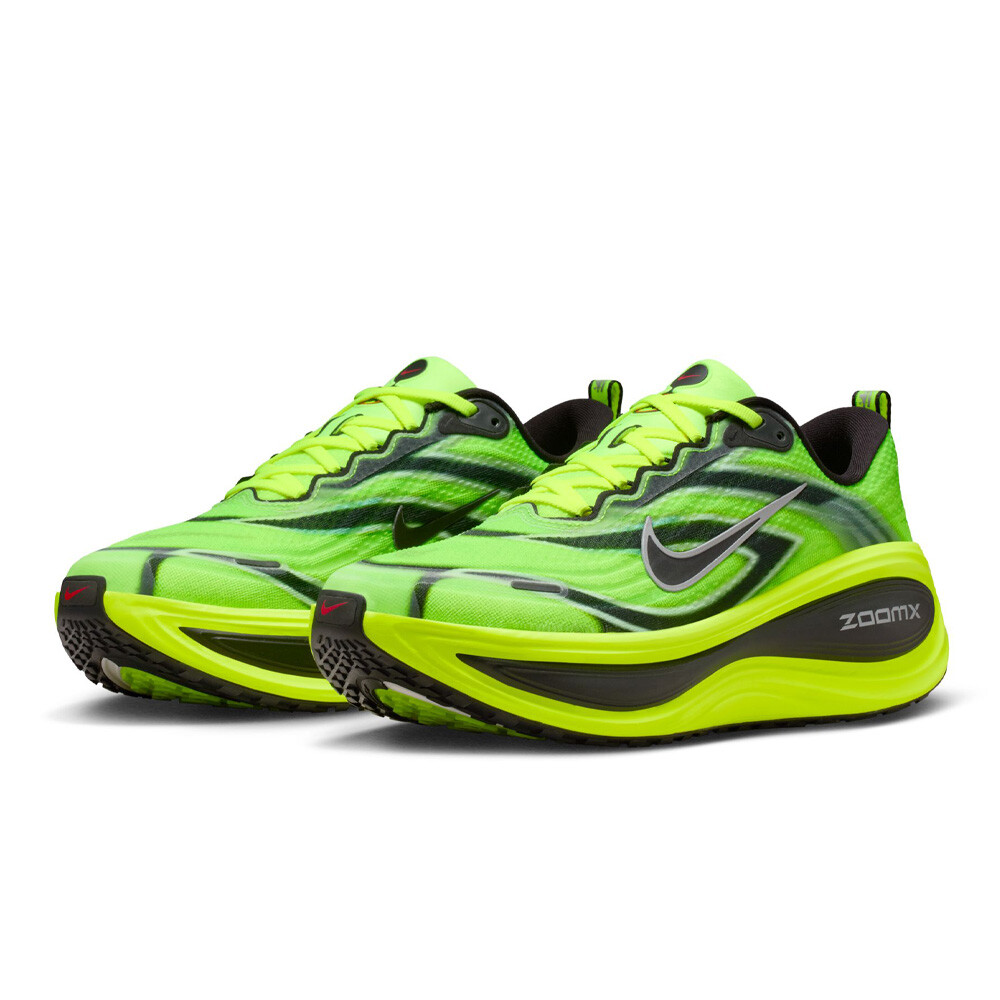
By PhysioRun · Updated June 2026
Nike make some of the most technologically advanced running shoes on the planet. They also make some of the most confusing. The carbon race range alone splits into two distinct shoes that look almost identical but perform very differently. The daily trainer range has multiplied into multiple lines with overlapping purposes.
This guide cuts through it. Here’s what each Nike running shoe actually does, who it’s for, and — from a physio-aware perspective — where the risks lie.
The Nike Running Philosophy
Two technologies define the Nike running range:
ZoomX foam — a Pebax-based foam (the same material Saucony uses in PWRRUN PB) that is extremely lightweight and energy-returning. Nike uses ZoomX in their race shoes and some premium trainers. It’s bouncy and responsive, but at very high stack heights it can feel unstable.
ReactX foam — a polyurethane foam with better durability than ZoomX and a firmer, more structured feel. Used in daily trainers. The 41-generation Pegasus replaced the original React with ReactX, claiming 13% more energy return.
Nike’s shoe architecture splits into three daily trainer lines — Pegasus (responsive), Vomero (max cushion), Structure (stability) — plus the carbon race range above them all.
One consistent caveat: Nike runs narrow. If you have a wide foot, bunions, Morton’s neuroma, or significant forefoot spread from years of running, try Nike shoes in person before buying. The narrow toe box is a recurring complaint from physios and injury-prone runners alike.
The Carbon Race Range
Alphafly 3 vs Vaporfly 3 — Understanding the Difference
This is the most important distinction in the Nike range, and most runners get it wrong. The two shoes look similar, cost similar amounts, and both use a full-length carbon plate in ZoomX foam. But they’re designed for different runners and different distances.
Alphafly 3 — The Marathon Shoe
Specs: 39.5mm heel stack + twin Air Zoom pods (effective forefoot ~47mm) · 8mm drop · 220g
The Alphafly is Nike’s flagship marathon racer. What sets it apart is the twin Air Zoom pods embedded in the forefoot — two pressurised air chambers that sit beneath the carbon Flyplate and add a springy, bouncy energy return on top of what the foam and plate already provide.
The Flyplate itself is wider and more stable than the Vaporfly’s plate, sitting higher in the stack closer to the foot. This gives the Alphafly a more stable, planted platform — particularly important in the final 10km of a marathon when your form starts to break down.
Who the Alphafly suits: Marathon and ultra-marathon distance. Runners over 75kg (the Air Zoom pods return more energy at higher loads). Runners who lose form in the later miles of long races. Those who want more cushioning protection over the full race distance.
Vaporfly 3 — The Speed Shoe
Specs: 40mm heel / 32mm forefoot · 8mm drop · 206g
The Vaporfly is lighter and generates more “pop” at race pace than the Alphafly. Its carbon plate is a stiff, spoon-shaped blade that sits closer to the ground — this positioning maximises the lever action of the plate and gives a snappier, more propulsive toe-off. At race speeds (sub-4 minute/km), this translates to a noticeable energy advantage.
The trade-off is that the Vaporfly is less forgiving. There are no Air Zoom pods to compensate when your form fades. The thinner forefoot stack means more impact reaches your legs in the later stages.
Who the Vaporfly suits: 5K, 10K and half marathon racing. Lighter, faster runners (typically under 70kg). Those with consistent running form who don’t lose technique under fatigue. Experienced carbon shoe users looking for maximum speed over shorter distances.
Alphafly 4 — What We Know
Released January 2026, the Alphafly 4 refines the Air Zoom pod system and improves upper fit based on feedback from the v3. Early reports suggest better stability underfoot and a more secure lockdown. Full reviews are emerging — worth checking if you’re buying new in 2026.
The Daily Trainer Range
Invincible 3 — The Maximum Protection Trainer
Specs: 40mm heel / 31mm forefoot · 9mm drop · Full ZoomX midsole · 310g
The Invincible is Nike’s most underrated shoe for injury-prone runners. It uses a full-length ZoomX midsole — the exact same Pebax foam used in the Vaporfly race shoe — but at a much higher stack for daily training. The result is a plush, bouncy, incredibly soft ride that absorbs impact extremely well while still returning enough energy to avoid feeling “dead.”
Version 3 added a strobel lining (a thin layer between the insole and the foam), which firms up the ride slightly compared to v2 and improves stability. It’s still very soft, but it no longer feels like running on a bouncy castle.
The Invincible 3 is consistently recommended for runners dealing with plantar fasciitis, knee pain, and post-stress-fracture return to running. The foam absorbs load before your body does.
The limitation: it gets wobbly at speed. Don’t try to use it for tempo runs or anything faster than easy pace. At that point, you want the Pegasus or step up to the carbon range.
Vomero 18 — The Tallest Stack, With Caveats
Specs: ~46mm heel / ~36mm forefoot · ~14mm drop · Dual foam (ZoomX + ReactX) · Heavyweight
The Vomero 18 is Nike’s tallest shoe ever — 46mm of stack in the heel, achieved by layering ZoomX over ReactX in a double-foam construction. It’s genuinely impressive for pure cushioning, and the ReactX layer underneath provides good durability that ZoomX alone doesn’t always deliver.
However, from a physio perspective, there are two things worth flagging:
The 14mm drop is steep. At that heel-to-toe differential, load is strongly directed to the quads and knees. This can benefit heel strikers with knee pain, but it also means the Vomero 18 is not the right shoe if your issues are Achilles or calf-related. And if you’re transitioning from a lower-drop shoe, the shift can feel abrupt.
The 46mm stack height increases instability. Research consistently shows that very high stack heights (above 40mm) are associated with reduced proprioception and increased ankle roll risk, particularly on uneven surfaces or when fatigued. On a treadmill or perfectly flat road this is a non-issue. On a tired runner on a slightly cambered road at mile 20, it matters.
The Vomero 18 suits a specific runner well: heel striker, knee or hip history, running on flat roads, wanting maximum underfoot protection. For everyone else, the Invincible 3 or Pegasus 41 is a safer choice.
Pegasus 41 — The Reliable Workhorse
Specs: 37mm heel / 27mm forefoot · 10mm drop · ReactX + Air Zoom units
The Pegasus has been Nike’s everyman running shoe for over 40 years, and the 41st edition is the best version yet for cushioned comfort. The switch from React to ReactX foam brought a softer, more responsive ride, and the addition of a rocker geometry makes the shoe feel more propulsive through heel strike. Air Zoom units sit in both the heel and forefoot, adding a little extra bounce at each end of the foot contact cycle.
Where the Pegasus 41 is less impressive is at faster paces. The cushioning that makes it comfortable on easy days doesn’t have enough energy return to feel efficient on tempo or threshold runs. But as an everyday trainer that’s reliable, durable and universally fitting, the Peg 41 does its job.
Structure 25 — The Stability Option
Specs: ~28mm · 10mm drop · Medial post
Nike’s stability shoe for overpronators. The medial post controls inward roll, and the lower stack gives more ground feel and control than the cushioned trainers. The honest assessment: the Structure range has never quite kept up with Brooks Adrenaline GTS or ASICS Gel-Kayano in terms of stability technology or cushioning. The Structure 25 is fine for mild overpronators who are committed to the Nike ecosystem.
Pegasus Premium — New for 2025
Sitting above the standard Pegasus in the range, the Premium adds a ZoomX foam layer for more energy return. It positions itself between the Pegasus and the Invincible — more bounce than a standard Peg, less bulk and instability than the Invincible. Early reviews are promising for runners who find the standard Pegasus a little flat but don’t want a full max-cushion shoe.
For Injured Runners: Which Nike?
Plantar Fasciitis & Heel Pain
Full ZoomX cushioning and a 9mm drop reduce plantar tension. Avoid the Vomero 18 — the 14mm drop increases demand on the plantar fascia. Best: Invincible 3.
Achilles Tendinopathy
Maintain 8–10mm drop. Avoid sudden transitions to the Vomero’s steep 14mm drop if you’re not already used to it. Best: Pegasus 41 or Invincible 3.
Runner’s Knee & ITB Syndrome
Higher drop shifts load from the knee. Avoid the Vaporfly — carbon plate rigidity can alter knee mechanics. Best: Vomero 18 (if ankle-stable) or Pegasus 41.
Stress Fracture & Shin Splints History
Maximum foam between you and the ground. Best: Invincible 3.
Wide Feet or Forefoot Issues
Consider other brands first. Nike’s narrow last is a real limitation. HOKA Bondi (wide fit), New Balance 1080 wide, or Saucony Triumph are better options.
Ready to Race but Still Cautious
The extra cushioning from the Air Zoom pods provides better late-race protection when form degrades, reducing the injury risk that comes with running tired. Best: Alphafly 3 over Vaporfly 3.
Alphafly vs Vaporfly: At a Glance
| Alphafly 3 | Vaporfly 3 | |
|---|---|---|
| Best distance | Marathon+ | 5K–Half Marathon |
| Runner weight | 70kg+ suits well | Under 70kg ideal |
| Plate | Wide Flyplate | Stiff spoon plate |
| Cushioning | Air Zoom + ZoomX | ZoomX only |
| Feel | Stable, bouncy | Snappy, fast |
| Late-race form | Forgiving | Less forgiving |
The PhysioRun Verdict
Nike make the best carbon race shoes in the world for many runners — the Alphafly/Vaporfly split is genuinely smart design. Where the range is weaker is in the stability and wide-fit categories, where Brooks and ASICS remain ahead.
For injury-prone runners, the Invincible 3 is the standout recommendation in the Nike daily trainer line — it’s one of the few max-cushion shoes using genuine race-grade foam without a carbon plate. And if you’re ready to add a race shoe, start with the Alphafly 3 rather than the Vaporfly — the extra cushion is a gift when your legs are done at mile 22.
This guide is for informational purposes. Always consult your physio before changing footwear during injury rehabilitation.
Enjoyed this? There’s a lot more inside PhysioRun Pro.
Full app access, a new Classroom Class every week, and a live session with James — plus every injury guide included. From £7/month.
Comments are closed