
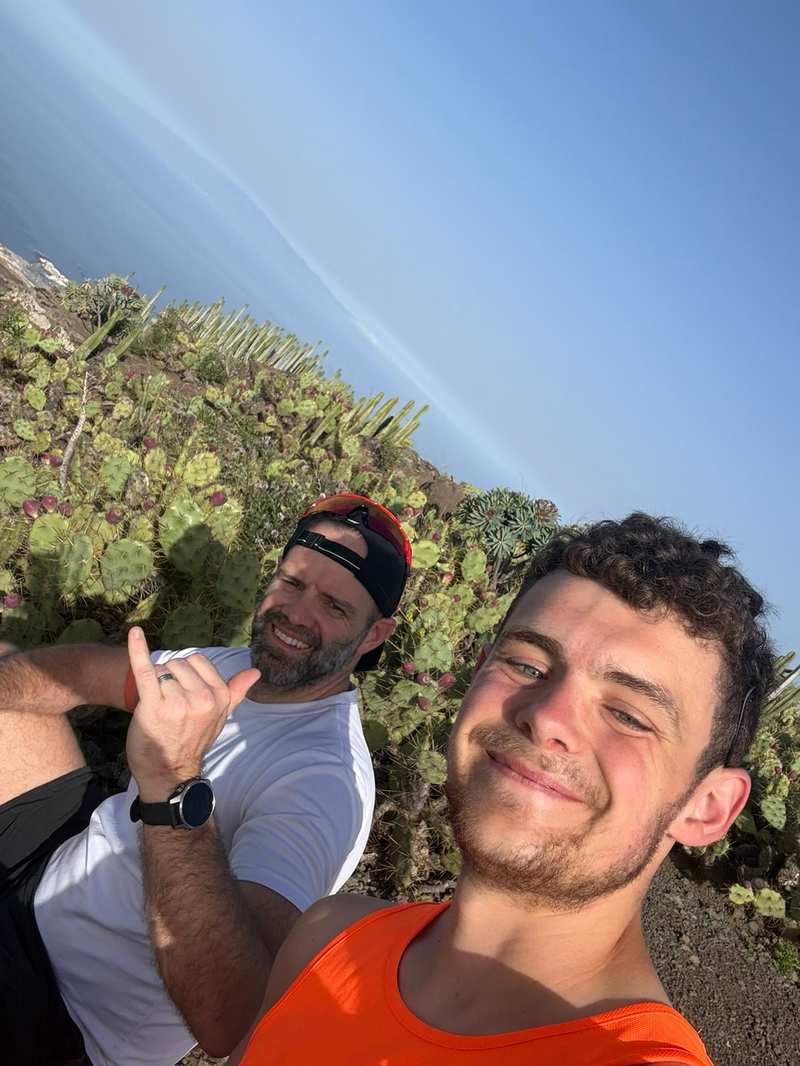
My nephew has been running for over ten years now — properly serious about it for the last six or seven. He’s 24, and every time we talk about running he asks me the same question runners have been asking physios forever: “should this hurt?”
I’m on the other side of that conversation these days — deep into masters territory myself, with a lot more running years behind me than he has. And a new study in PLOS ONE landed on my desk this week that put some hard numbers on something I’d already noticed just comparing notes with him: young runners and older runners don’t get hurt the same way, for the same reasons, or with the same things protecting them.
The study
Researchers surveyed 207 adult runners — 105 “young” runners aged 18–34, and 102 “master” runners aged 35 and over (that’s the standard cutoff used in masters athletics). I still remember the first time a race pinned a big “V” on the back of my vest, marking me out as a veteran — there’s no easing into that category, it just arrives one birthday. Everyone in the study filled out a validated injury questionnaire covering the previous seven days, plus detailed questions on training habits, mileage, footwear, and surfaces — much the same information I’d take from a runner in clinic before we’ve even started talking about their actual pain.
The headline finding: 51% of master runners reported some level of injury-related limitation to their running in the past week, compared to 34% of young runners. That’s a big gap, and it wasn’t explained away by the older group simply doing less — if anything, they were doing more.
What was different between us
Reading through the results felt a bit like reading a comparison of my nephew and me specifically:
Master runners run more and have run for longer. Average running history of 15.5 years vs 8.1 years, longer training sessions (60.5 vs 50.4 minutes), and higher weekly mileage (31.5 vs 16.0 miles). We also own more pairs of shoes, replace them more often based on mileage rather than waiting for them to fall apart, and are more likely to run with cushioned insoles. In other words: more experience, more kit-awareness, more mileage under the belt — and still a higher injury burden.
That average doesn’t hold in my own house, mind you. My nephew is currently out there running 70–80+ mile weeks, more than double my own 35 or so — a reminder that these are group averages, and any individual pairing of a young runner and a master runner can look nothing like the study’s numbers. The shoe count is closer to what you’d expect, though he definitely edges me out there too — it’s just a much closer call than the mileage.
The injury itself showed up in a different place. Knee and foot/ankle pain topped the list for both age groups, no surprise there. But master runners reported shoulder, arm, and forearm pain at a much higher rate — 13% versus just 2% in young runners. The researchers are appropriately cautious about this one (the numbers involved are small, and some of that could be old injuries or non-running activity showing up during a run rather than being caused by it), but it’s a pattern worth watching for in this age group rather than assuming every ache is a knee or calf issue. It’s part of why, in the Classroom classes, we make a point of never leaving the shoulders out of the strengthening equation — upper body work tends to get skipped by runners of every age, but it’s the master group actually reporting the pain.
What actually predicted injury was different too. This is the part I found most useful clinically. When the researchers modelled what was associated with reduced or increased odds of injury-related limitation, the two age groups barely overlapped:
For young runners like my nephew, protective factors included having a running coach, training on off-road tracks, wearing shoes with specific supportive features, and mixing up training surfaces. The main things nudging risk upward were longer individual training sessions and running on grass.
For master runners like me, the picture was less reassuring — there were no protective factors identified at all. The things associated with higher injury odds were smoking, running on gravel or pebbled surfaces, and owning more pairs of running shoes. That last one is almost certainly reflecting reverse causality — we buy more shoes because we’re managing niggles, not the other way round — but it’s a useful reminder that rotating shoes and buying gear isn’t itself a substitute for addressing training load.
What I’m taking from this
For the master runners reading this (my people): the absence of a protective factor in this data doesn’t mean there’s nothing you can do — it means the fix probably isn’t a training surface tweak or another shoe purchase. It’s the boring stuff: periodised training with real recovery weeks built in, paying attention to cumulative load rather than just this week’s mileage, getting shoulder and upper-body niggles checked rather than assuming they’re unrelated to running, and being honest about modifiable risk factors like smoking, which the study linked to nearly double the odds of participation-limiting injury.
For young runners like my nephew: this is about as strong an evidence base as you’ll get for getting a coach, or at minimum a structured plan, rather than winging it. Vary your surfaces, don’t default to the same shoe for everything, and watch session length before you watch mileage — the data suggested it was long individual sessions, not weekly volume, nudging risk up in this group.
And for both of us: injury patterns aren’t uniform across a running life. What kept my nephew upright at 24 won’t necessarily be what keeps me running at my age, and vice versa. That’s exactly why we built the Capacity Tracker and Runner Profile tools into the Hub — load creeps up quietly, in both directions, and it’s a lot easier to catch on a graph than to feel in the moment.
Reference: Berns R, Smith JA, Sánchez N, Jeffcoat S, Sigward S, Hooyman A, Farrokhi S. Variation in prevalence of participation limitation, injury location, and training habits between young and master runners: A cross-sectional study. PLOS ONE. 2026;21(5):e0346973.
Comments are closed