
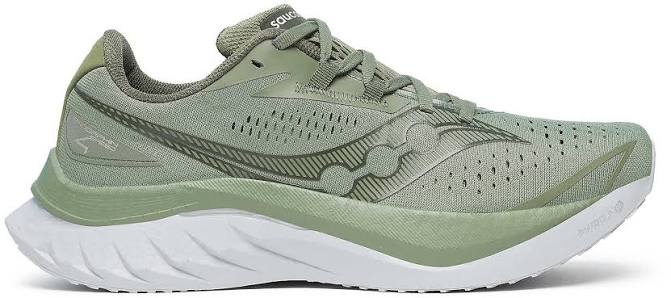
By PhysioRun · Updated June 2026
If you’ve been looking at running shoes lately, Saucony keeps coming up. And for good reason. Their Endorphin range has quietly become one of the most respected performance lines in the game — and unlike some brands that build shoes for elites and scale down, Saucony has specifically engineered their carbon shoes to work for normal runners too.
The 2026 lineup has a few notable changes: the Endorphin Speed has moved to version 5, the Azura is now properly established as a daily training staple, and the range has been refined into one of the clearest hierarchies in running footwear. Here’s everything you need to know, from a physio-aware perspective.
The Saucony Philosophy
Two things define Saucony’s design language across the range:
SPEEDROLL geometry — a curved, bevelled sole (similar to HOKA’s Meta-Rocker) that propels you forward through the gait cycle and reduces the braking force that slows you down with every heel strike. It also reduces load on the forefoot, which matters a lot if you’ve had plantar fasciitis or metatarsal pain.
Foam progression — Saucony has built a clear hierarchy of foams. From everyday to elite, it goes: PWRRUN → PWRRUN+ → PWRRUN PB (Pebax-based, for performance) → IncrediRUN (their most energy-returning foam, reserved for the Elite 2). When you understand this, the whole range makes sense.
The Endorphin Race Range
Endorphin Elite 2 — The Flagship
Specs: 39.5mm heel / 31.5mm forefoot · 8mm drop · 199g (men’s size 9)
Saucony’s fastest, lightest, most elite race shoe. The Elite 2 features a dual-density midsole: IncrediRUN (their most responsive foam ever, sitting above the plate) combined with PWRRUN HG below it. Lab testing showed 157 SA in the heel — extraordinarily high energy return.
The carbon plate is slotted — rather than a single solid blade, it has cuts through it that allow slightly more independent flex across different parts of the forefoot while preserving the propulsive snap. One honest caveat: the IncrediRUN midsole is very soft, which can create a wobbly platform for runners who aren’t running with consistent form. This shoe rewards efficiency.
Who it’s for: Runners targeting race PRs at half marathon and marathon. Not a training shoe — keep it for race day.
Endorphin Pro 5 — The Race Shoe for Real Runners
Specs: 39.5mm heel / 31.5mm forefoot · 8mm drop · ~218g
The Pro 5 is a meaningful update. Saucony changed the carbon plate to a fork-style design — four curved prongs radiating through the forefoot rather than a flat solid piece. This suits runners who aren’t at elite pace and don’t generate enough ground reaction force to fully load a rigid plate.
The foam stack is PWRRUN HG above the plate and PWRRUN PB below — both Pebax-based, both highly energy-returning. The forefoot is notably wide at 120.1mm, which is unusually generous for a race shoe and a genuine advantage for runners who’ve had forefoot issues with narrower carbon shoes. The overall feel is more accessible than the Elite 2 — a well-rounded super shoe that works for a wide range of paces and gait patterns.
Who it’s for: Recreational to competitive runners wanting genuine race-day performance. If you’re buying your first carbon shoe, start here.
Endorphin Speed 5 — The Training Plate Shoe
Specs: 36mm heel / 28mm forefoot · 8mm drop · 244g (men’s size 9)
The Speed 5 is not a carbon shoe — this distinction matters enormously. It uses a winged nylon plate rather than carbon. A nylon plate gives you the propulsive forward roll of a plated shoe without the forefoot rigidity that carbon creates.
Carbon plates work by storing and returning energy through a stiff lever — that stiffness restricts natural toe flexion, which over high mileage can contribute to metatarsal stress fractures and navicular issues. The Speed 5’s nylon plate is flexible enough to use regularly in training. The foam is PWRRUN PB (Pebax) throughout — the same race-grade foam used in the Pro. Minor updates from the Speed 4 include very slightly more stack and a refined upper for better lockdown.
Who it’s for: Runners who want a fast-feeling shoe they can actually train in every week. The Speed 5 should be in the rotation of every runner interested in the Endorphin line.
Endorphin Azura — The Plateless Performance Daily Trainer
Specs: 40mm heel / 32mm forefoot · 8mm drop · 241g · £149.95
The Azura is the most interesting shoe in the 2026 range for injury-prone runners. Built on the same last and geometry as the Elite 2, but with no plate and a PWRRUN PB midsole throughout. The result is a shoe that gives you 40mm of Pebax-based performance foam and SPEEDROLL propulsion with zero plate-related forefoot rigidity. It’s lightweight, fast-feeling and genuinely bouncy, but doesn’t demand anything of your forefoot.
Think of it as race-shoe foam in a daily trainer body — and an ideal bridge for runners returning from injury who aren’t ready for a plated shoe but want more than a standard cushioned trainer.
Who it’s for: Injury-returning runners. High-mileage training. Anyone who wants performance foam without committing to a plated shoe.
The Daily Trainer Range
Triumph 22 / 23 — Maximum Cushion Daily Trainer
Specs: 37mm heel / 27mm forefoot · 10mm drop · PWRRUN PB foam
Saucony’s most cushioned daily trainer — and unusually, it uses Pebax-based foam (PWRRUN PB) rather than the cheaper EVA found in most max-cushion trainers. This gives a bouncy, responsive feel alongside the cushioning protection. The 10mm drop is one of the higher options in the Saucony range, reducing Achilles and plantar tension. Excellent for recovery runs, easy long runs, and high-mileage days.
Ride 17 — The Workhorse
Specs: 35mm heel / 27mm forefoot · 8mm drop · PWRRUN+ foam
The benchmark Saucony everyday trainer. PWRRUN+ (a TPU-based foam) delivers a comfortable, durable ride that handles everything from easy miles to moderate-paced training. Does everything well. If you only own one Saucony, this is it.
Guide 17 — The Stability Workhorse
Specs: 34mm heel · 8mm drop · PWRRUN+ foam · Medial post
The stability version of the Ride. A medial post for overpronation control, same PWRRUN+ foam. A consistent physio recommendation for runners with medial knee pain, flat feet, or overpronation-related issues.
Kinvara 15 — Lightweight Minimal
Specs: ~22mm · 4mm drop · PWRRUN foam
Lightweight, low-drop, minimal cushion. Not for injured runners or those new to lower-drop shoes. Best as a second pair for short, easy sessions once you’re fully fit and comfortable with lower drop geometry.
For Injured Runners: Which Saucony?
Plantar Fasciitis & Heel Pain
High stack and 10mm drop reduce Achilles and plantar tension. SPEEDROLL lessens forefoot loading. Avoid the Kinvara. Best: Triumph 22/23.
Achilles Tendinopathy
Maintain 8–10mm drop. Never jump straight to lower-drop shoes — transition gradually over weeks once the tendon settles. Best: Triumph or Ride 17.
Runner’s Knee & ITB Syndrome
Stability features control hip adduction; 8mm drop distributes load more evenly than high-drop options. Best: Guide 17.
Stress Fracture History (Shin, Metatarsal)
Maximum foam, no plate stiffness. The Azura gives performance-foam protection without any plate rigidity. Best: Triumph 22 or Endorphin Azura.
Ready to Race but Still Cautious
The Pro 5’s wider forefoot and slightly softer foam are more forgiving of imperfect form. The Elite 2’s IncrediRUN midsole demands efficiency. Best: Endorphin Pro 5 over the Elite 2.
Returning to Performance Training
Build unplated mileage in the Azura before adding the Speed 5’s nylon plate. Only then consider carbon shoes on race day. Best: Endorphin Azura → Speed 5 → Pro 5 for races.
Quick-Decision Guide
| Need | Shoe |
|---|---|
| Elite race day | Endorphin Elite 2 |
| Half marathon / marathon race | Endorphin Pro 5 |
| Performance training (nylon plate) | Endorphin Speed 5 |
| Plateless performance daily trainer | Endorphin Azura |
| Maximum cushion daily trainer | Triumph 22/23 |
| Everyday workhorse | Ride 17 |
| Stability + cushion | Guide 17 |
| Lightweight second pair | Kinvara 15 |
The PhysioRun Verdict
Saucony has one of the clearest and most injury-conscious ranges in running footwear right now. The foam hierarchy is transparent, the geometry is consistent across the range, and the Azura finally gives injury-prone runners a performance option that doesn’t ask anything dangerous of the foot.
For runners in rehab or returning to training: Triumph 22/23 → Endorphin Azura → Endorphin Speed 5 is the best progressive return-to-performance pathway available. Each shoe adds a little more energy return and demand without making a sudden jump in forefoot loading.
And if you’re ready to race: the Endorphin Pro 5 is the most accessible, most versatile super shoe available — particularly for heel strikers, wider feet, or runners who’ve found Nike’s carbon range too rigid.
This guide is for informational purposes. Always consult your physio before changing footwear during injury rehabilitation.
Comments are closed